
When it comes to ensuring that your warehouse or plant is OSHA compliant, chances are you first think about hazardous material storage, machine guarding, and safety equipment, including your PPE. And that certainly makes sense. What you might be less likely to think of is your facility’s floor; however, flooring can play an important role in supporting safe working conditions. Selecting the right flooring system can contribute to improved visibility, safer movement throughout the facility, and fight contamination and static buildup.
Improve General Visibility with Light-Reflective Coatings
A quality light-reflective coating can provide general safety benefits by improving visibility and reducing employee drowsiness, both of which can be contributing factors to collisions. These benefits are especially true for open-air structures, like parking garages, at night when visibility is naturally reduced.
How Flooring Can Help Prevent High-Energy Hazards
A common concern of compliance inspections is high-energy hazards. These types of hazards include both falls and situations where workers may be struck or caught by heavy equipment or machinery. Your flooring surfaces can help with compliance in these issues by providing sufficient traction and outlining safe zones and traffic patterns.
Slip-Resistant Floor Coatings Reduce Risk of Falls
According to the Bureau of Labor Statistics, falls, slips, and trips are one of the leading causes of workplace fatalities, accounting for 844 deaths in 2024.
A non-slip floor coating is an effective way to reduce the likelihood of this type of accident in your facility, especially on elevated walkways and wet or high-traffic environments. Slip-resistant coatings add texture that helps increase traction. In addition to supporting safety standards and protecting your team, they also help reduce liability and control costs.
Integrated Safety Markings Improve Worker Awareness
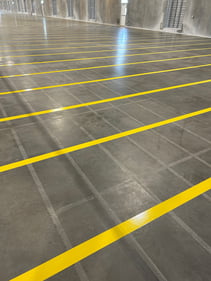
Floor coatings can also incorporate safety markings, outlining pedestrian walkways, hazard zones, and equipment boundaries. These markings help protect workers from high-energy hazards by clearly communicating traffic patterns, guiding movement, and preventing collisions.
In some cases, floor striping can be achieved with colored tape (preferably an industrial option manufactured specifically for the purpose); however, integrated markings, such as color-coded epoxy, avoid the risks of peeling, fraying and creating an additional trip hazard. Color epoxy or industrial paint also allow for more flexibility in your safety-marking designs.
ESD Flooring Helps Control Static Buildup
In facilities where flammable vapors, liquids, gases, combustible dust, or fibers may be present, static buildup can become more than an inconvenience. A static discharge can create an ignition risk, making static control an important part of the overall safety strategy.
Electrostatic dissipative, or ESD, flooring is designed to help prevent static charges from building up on the floor surface, people, or equipment. Instead, the system helps dissipate electrical charges in a controlled way. In the right environments, this helps reduce ignition risks and support safer day-to-day operations.
This can be especially important in facilities that handle flammable materials or operate in hazardous classified locations. OSHA’s standard for hazardous locations addresses environments where the presence of flammable or combustible materials must be considered when selecting electrical equipment and safety controls.
While ESD flooring doesn’t replace proper hazardous location classification, ventilation, electrical safeguards, or other OSHA-required controls, it does support safer working conditions in facilities where static-sensitive materials, equipment, or processes are present.
Seamless Surfaces Support Safer Working Conditions
Seamless floor coatings create a uniform, non-porous surface that is easier to clean and maintain. In environments where spills, condensation, or contaminants may be present, maintaining a clean surface is critical to preventing secondary hazards.
By reducing the potential for buildup and contamination, seamless flooring systems support safer working conditions and more consistent facility maintenance. Specialty coatings for high-risk environments, such as those for chemical processing stations, provide additional protection for your work foundation as well as employees.
How CPC Coatings Supports Safer Industrial Environments
CPC Floor Coatings works with industrial and commercial facilities to design flooring systems that support safety, durability, and long-term performance. Creating a safer industrial environment starts with understanding how every part of your facility contributes to risk.
Contact our team today to schedule an assessment and learn how the right flooring system can support your facility.