
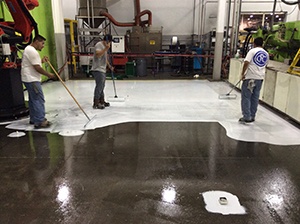
Most industrial and commercial facilities rely on concrete floors because they are durable, practical, and built for heavy use. However, even untreated concrete floors need regular cleaning and maintenance, especially when the surface will eventually be polished, coated, stained, or repaired.
If your facility is preparing for a professional floor treatment, cleaning the existing concrete surface first helps the project move more smoothly. Removing dirt, debris, oil, grease, and surface buildup gives your flooring contractor a clearer view of the slab’s condition before recommending the next step.
Here’s how to properly clean concrete floors, so that you can keep your facility looking nice while also preparing for your next polish or coating.
Basic Equipment for Cleaning Concrete Floors
Before cleaning an untreated concrete floor, make sure your team has the right equipment on hand. The tools you need may depend on the size of your facility, the type of soilage or stains present, and whether the floor is being prepared for polishing or coating.
Common cleaning supplies may include:
- Broom or dust mop
- Shop or industrial vacuum
- Wet mop or auto scrubber
- Soft-bristled scrub brush
- pH-neutral or concrete-safe cleaner
- Degreaser for oil or grease stains
- Absorbent materials for spills
- Personal protective equipment, depending on cleaners used
Make sure to vet your cleanser and equipment choices for the task at hand. Some chemicals can leave residue behind, interfere with future coatings, or affect how the concrete surface responds to treatment.
Step 1: Address Spills Quickly
Don’t wait for a thorough cleaning to mop up spills. They should be addressed as soon as possible, especially if they involve oil grease, chemicals, or other materials that can penetrate untreated concrete. Because concrete is porous, liquids can soak into the surface and become more difficult to remove over time.
It’s a good idea to keep an emergency spill kit on hand in case a team member or customer accidentally spills a harmful chemical. With a ready-made solution, you can keep the floor clean and personnel safe at the same time.
Step 2: Remove Loose Dirt and Debris
To clean concrete floors, start by clearing the floor and then sweeping or vacuuming daily debris, dirt, dust, and loose material from the surface. This step prevents grit from being pushed across the floor during wet cleaning, where it can contribute to surface wear or make cleaning less effective.
For large industrial or commercial facilities, an industrial vacuum or auto scrubber may be more practical than manual sweeping.
Step 3: Wash the Concrete Floor with a Safe Cleaner
Depending on how much foot traffic your place of business sees, you will need to wash the concrete floor regularly.
Pre-treat any oil or grease stains beforehand with degreaser. Use a concrete-safe cleanser and water to wash the surface. For general cleaning, a pH-neutral cleaner is often the best choice because it helps remove dirt without leaving behind harsh residues that could interfere with future polishing or coating.
When the floor is wet, scrub it with a safe cleaner and a soft bristled brush to remove any grime that might be embedded into the surface. For larger spaces, an auto scrubber can help more efficiently and consistently than manual scrubbing.
Step 4: Remove Stubborn Oil and Grease Stains
It’s best to treat grease or oil spill stains when they’re fresh, using absorbent material to pull the contaminant out of the surface. If you missed that window, you may find that some stains or oil spills don’t come out of your concrete floor with standard cleaning and may require additional treatment with a concrete-safe degreaser or professional cleaning method.
It’s important to treat these stains before the floor is polished, coated, or sealed. These contaminants can affect surface preparation and may interfere with how a future floor system bonds to the concrete.
For detailed stain guidance on polished floors, read our article on How to Safely Remove Stains from Polished Concrete Floors.
Step 5: Rinse Thoroughly
After the wet wash and any additional stain treatment, rinse the floor again to remove any cleaning residue.
Step 6: Deep Clean Before Polishing or Coating
Every so often, it’s not a bad idea to deep clean your concrete floor or have a professional do so.
If your facility is preparing for polishing, coating, staining, or repair, deep cleaning may be necessary to remove built-up grime, residue, or contaminants from the slab. This is especially important when the concrete surface needs to be evaluated before treatment.
These methods can include but are not limited to: abrasive blasting, acid etching, and pressurized water.
However, note that some deep cleaning or preparation methods can alter the surface profile of the concrete, which may be helpful before coating but unnecessary or inappropriate for other treatments. A flooring professional can help determine which preparation method is appropriate for your floor.
Step 6: Let the Concrete Dry Completely
After washing or deep cleaning, allow the concrete floor to dry completely before allowing foot traffic or moving forward with any floor treatment. Moisture left in the slab or on the surface can affect polishing, coating adhesion, stain appearance, and overall project results.
If moisture is a recurring issue, your facility may need professional moisture testing before a coating or other floor system is installed. You may also want to consider a vapor barrier coating.
Prepare Your Concrete Floor for Professional Treatment
There are many benefits to having your concrete floor professionally polished, such as a high-gloss finish and exceptional sanitation. As mentioned previously, when you keep your concrete floor clean, this process can move more quickly.
Clean concrete gives your flooring contractor a better starting point, but cleaning alone does not replace professional surface preparation. Before polishing, coating, staining, or repairing the floor, a professional will still need to evaluate the slab condition, contamination, moisture, cracks, and surface profile.
If your concrete floor looks worn, stained, or difficult to maintain, CPC Floor Coatings can help determine whether polishing, coating, staining, or repair is the right next step. For more information on concrete floor care and having your floor polished, contact CPC Floor Coatings.
