If you’re in charge of maintaining a school building, you want to make sure you provide a cheerful, safe, and sanitary environment where children can learn, but you also know how tough kids can be on the facilities day in and day out.
Floors can be especially difficult to keep in good repair. Whether it’s because of tracked dirt, scuffing shoes, spills, or accidentally dropped items, it’s easy for school floors to start looking chipped and worn.
If you need to renovate part or all of your facility, chances are you’re looking for durable school flooring that is easy to clean, long-lasting, and appropriate for each space. The right flooring for schools often depends on how each area is used, from high-traffic hallways to classrooms, locker rooms, multipurpose spaces, and common areas.
Polished concrete and epoxy floor coatings can be economical choices for schools due to their longevity and durability. They’re also easy to clean and don’t trap allergens. Let’s look at the demands of different spaces in your school and how these types of flooring could help meet them.
Flooring for School Lobbies, Hallways, and Other High-Traffic Areas
School lobbies and common areas need to make a good impression while standing up to daily use. These spaces often experience heavy foot traffic, tracked-in dirt, and frequent cleaning.
School hallways experience some of the heaviest daily foot traffic in the building. Students, staff, carts, roller backpacks, and cleaning equipment all move through these areas throughout the day, which means the floor needs to stand up to constant use.
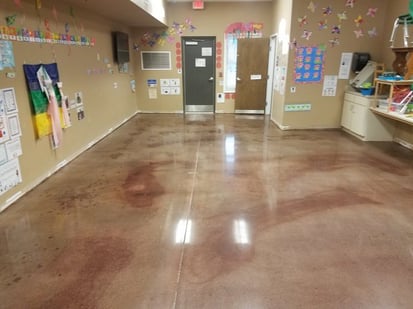
Polished concrete can be an economical option because it uses the existing concrete slab. The process of polishing increases the floor’s hardness to create a smooth surface that stands up well under heavy foot traffic and is easier to clean than grounded tile. Staining can also add color and visual interest without sacrificing durability.
Epoxy floor coatings may be a better fit when a school needs additional moisture resistance, decorative color, or wants to showcase its school spirit in the flooring system. Epoxy floor coatings can employ color-coded directional markings to help guide traffic flow, mark transitions between areas, or add school colors to otherwise plain corridors.
Flooring for Classrooms and Learning Spaces
Classroom flooring should support daily activity while remaining easy to clean and maintain. Between desks, chairs, dropped supplies, tracked dirt, and frequent cleaning, classrooms need durable flooring that doesn’t create unnecessary maintenance challenges.
Polished concrete can be a strong option for classrooms because it uses the existing floor instead of bringing in other materials. It can provide a clean, professional appearance while standing up to everyday use.
For classrooms that need more color, moisture resistance, or surface protection, epoxy floor coatings may be appropriate. Epoxy is available in a wide range of colors and finishes, including playful confetti-style patterns.
School Locker Room Flooring
Locker rooms require flooring that can withstand moisture, frequent cleaning, changing foot traffic, and exposure to spills or cleaning products. These spaces need surfaces that are easy to sanitize and maintain over time.
Epoxy floor coatings can be a good choice for school locker rooms because they are durable, damage-resistant, and impervious to moisture. A properly installed epoxy coating creates a seamless surface that can help simplify cleaning and reduce moisture-related maintenance concerns.
Slip-resistant textures can be incorporated to support safer movement in these wet or moisture-prone areas.
Choosing Between Polished Concrete and Epoxy Floor Coatings for Schools
Polished concrete and floor coatings can both be economical flooring options for schools, but they solve different problems.
Polished concrete is often a strong choice for hallways, classrooms, lobbies, and common areas where schools want durability, easy maintenance, and a polished appearance. Epoxy floor coatings may be better suited for locker rooms, bathrooms, laboratories, athletic support spaces, and other areas that need moisture resistance, chemical resistance, or added surface protection.
For many schools, the best solution may be a combination of systems based on the needs of each zone.
Experienced Flooring Installation for Schools
CPC Floor Coatings has worked with school facilities to provide durable flooring systems designed for long-term performance, cleanability, and heavy daily use.
For example, CPC completed flooring upgrades for a large Upstate South Carolina school district that needed reliable solutions across multiple facilities. The project included polished concrete and epoxy flooring systems designed to support school maintenance needs, student traffic, and long-term value.
These types of projects help school districts address common flooring challenges by selecting systems that fit the function of each space.
Not Sure Which Flooring Is Right for Your School?
Choosing school flooring often means balancing durability, maintenance, safety, and budget across multiple spaces. CPC Floor Coatings can evaluate your facilities and recommend the best options for hallways, classrooms, locker rooms, common areas, and athletic support spaces.
If you’re located in Georgia, Eastern Tennessee, or the Carolinas, contact our flooring experts to schedule a consultation.
Frequently Asked Questions